


Kotlet
Overview
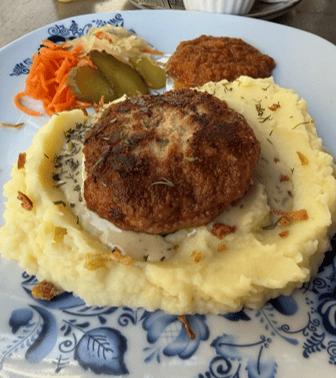
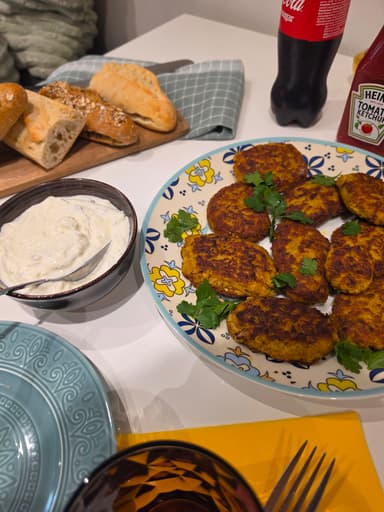
Kotlet is a familiar Iranian pan-fried patty, made from ground meat, potato, onion, egg, and spices such as salt, pepper, and turmeric. Despite its strong association with Iranian home cooking, it is a recent addition to Iranian tables. Apparently, this dish entered the country during the nineteenth century, when European cultural and culinary habits' influences were becoming increasingly visible in the Qajar court (Chehabi, 2003) (Mahdavi, 2015). Studying this dish in Iran illustrates how a foreign dish can be adapted through local ingredients, existing cooking practices, and repeated domestic use until it becomes part of everyday cultural heritage.
History & Cultural Significance
The history of kotlet starts with the French côtelette. An earlier form, costelette, is documented around 1393 in Le Ménagier de Paris. The word derives from côte, meaning rib, and originally referred to a small rib or a portion of meat associated with the rib (CNRTL, n.d.). By the seventeenth and eighteenth centuries, côtelette was well established in French culinary vocabulary and referred mainly to a particular cut of meat rather than a fixed recipe.
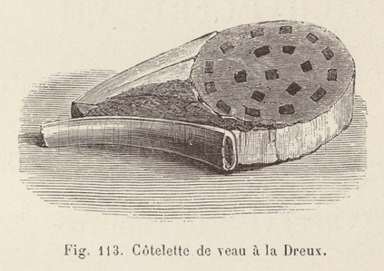
With the publication of the first French cookbooks, French cuisine became influential across Europe. Each country, inspired by French cuisine and drawing on locally available ingredients and its own cooking styles, adapted these dishes. côtelette is one such example. The term and preparation of côtelette were adopted into different culinary methods. Its recognition gradually expanded from a bone-in rib chop to boneless, chopped, or minced meat.
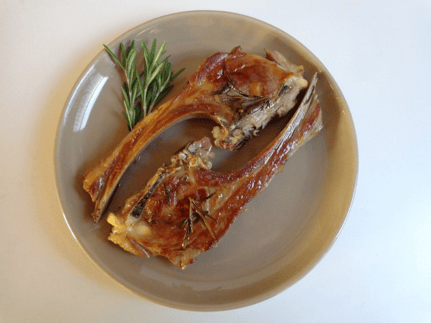
Russia, however, played the most significant role in transforming this dish. From the eighteenth century onward, French cultural and culinary influences entered Russian aristocratic life. French cooking techniques and professional cooks were introduced into elite Russian households. This act created a sustained interaction between French culinary traditions and existing Russian food practices (Goldstein, 1983) (Grigorieva, 2010). The influence is also visible in the cooking of the côtelette, which began as a bone-in cut of meat in French cuisine but was gradually transformed in Russian kitchens into a dish of chopped or minced meat, adapted to local tastes, ingredients, and household economy. Within this context, the French côtelette entered Russian cuisine as kotleta. This version was shaped structurally more like the later Iranian kotlet than the original French rib chop (Grigorieva, 2010).
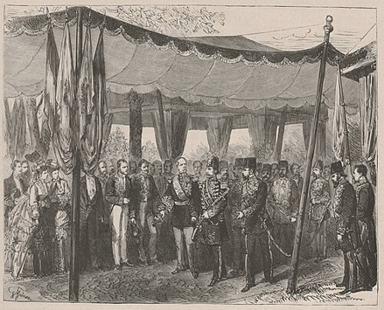
During the Qajar period, increasing contact with European countries, particularly through royal journeys and diplomatic exchanges, contributed to the introduction of new cultural influences into Iran (Motadel, 2011). These influences extended to food culture and were reflected in cooking practices, dining customs, the importation of new ingredients, and the adoption of new culinary terminology. The Qajar period therefore represented an important stage in the gradual incorporation of foreign elements into Iranian culinary culture (Chehabi, 2003) (Mahdavi, 2015).
An important early reference appears in Sufra ye Aṭʿema, a Qajar court cookbook dated 1301 A.H., corresponding to 1883-1884. The manuscript was connected with the kitchen of Nāṣer al Din Shah, the 4th Qajar king, and was compiled in a court environment with direct European presence and influence. At the same time, Persian culinary vocabulary was also influenced by Russian contact. It is therefore possible that Iranian kotlet developed through both direct French influence and the Russian kotleta, rather than through one exclusive route.
By the end of the nineteenth century, European dishes had become sufficiently established in elite Iranian cuisine to form a recognizable category. A cookery manuscript from 1898 includes a section devoted to aghziye ye farangi, or European foods, which contains several foreign-style preparations including Cottellete (Mahdavi, 2015).
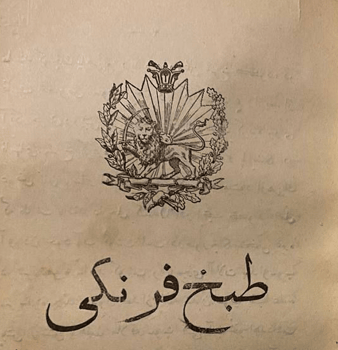
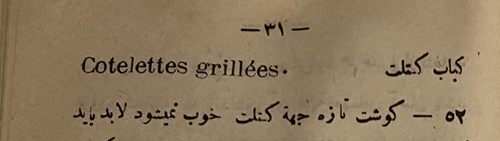
The incorporation of potato, itself a relatively new ingredient in Iranian cuisine, was particularly important in transforming the European cutlet into the form now associated with Iranian kotlet.
The adoption of kotlet was also facilitated by its resemblance to older Iranian fried patties such as Shami. Shami was already established in Iranian cuisine before the arrival of the European Cotelette and commonly combined meat with legumes, egg, or other binding ingredients (Neshat al Dowleh, 1972). Iranian cooks were therefore already familiar with shaping a meat-based mixture into individual portions and frying it. This similarity may have made the foreign preparation easier to incorporate into Iranian cooking.
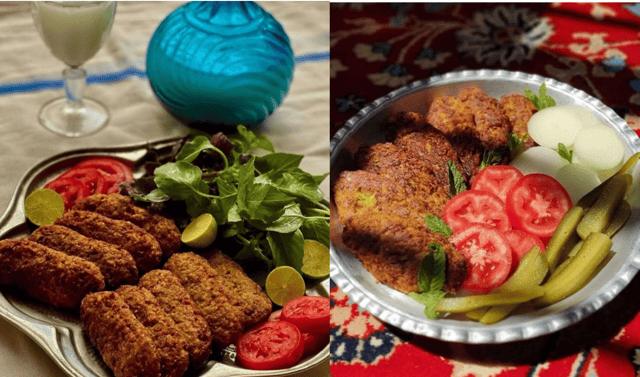
The transformation of kotlet hasn’t stopped with its introduction to Iran. In fact, it continued to adapt across different regions, considering local ingredients and cooking habits. Although the basic components of kotlet are generally the same, variations appear in the type of meat, potatoes, and spices. Najaf Daryabandari, the author of one of the most important works of modern Iranian culinary literature, dedicates an entire chapter of his Ketab-e Mostatab-e Ashpazi to kotlet and provides instructions for preparing at least seven different varieties (Daryabandari & Rastkar, 2005). Such variation demonstrates that kotlet has become a flexible domestic food rather than a preserved copy of a European recipe. Its identity is maintained through recognizable preparation methods, shape, and texture, rather than through one fixed list of ingredients.
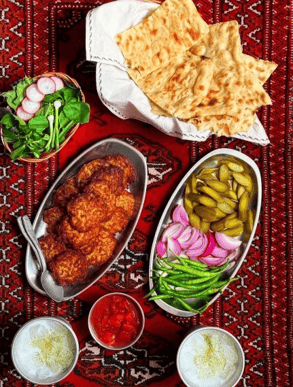
The cultural significance of kotlet in Iran is connected to everyday life. This food is strongly associated with family gatherings, school meals, picnics, and family trips. This association comes from kotlet’s characteristics. Kotlet can be prepared in advance, transported easily, and eaten either warm or cold. These experiences have made the dish a carrier of personal and collective memory.
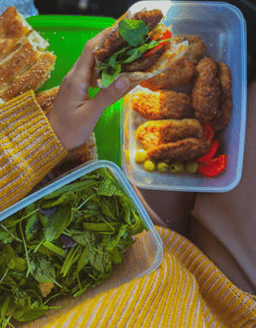
The interviews presented in the "Wikipaz" podcast on kotlet are useful in the context of collective memory. Wikipaz is a Persian food podcast, and each episode focuses on a particular Iranian or international dish. In each episode, they teach listeners how to cook a particular dish and discuss its historical dimensions. They also invite people to contribute through interviews and by sharing their related memories for each episode. Collecting these interviews provides a valuable resource for examining Iranians’ collective memory in relation to food. In the Kotlet episode, interviewees remember the dish through family trips, picnics, and family gatherings (Wikipaz, 2024). Although these interviews do not provide a historical account of Kotlet's origin, they provide evidence of its emotional and cultural significance within Iranian collective memory.
Ingredients
Ground beef
potatoe
onion
egg
turmeric
black pepper
salt
garlic powder
Vegetable oil
Recipe
Preparation Method
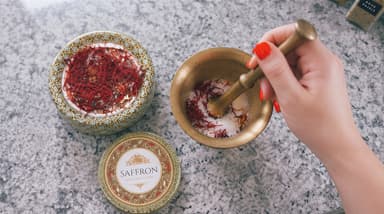
Step 1: Prepare the saffron. Finely grind the saffron with a small amount of powdered sugar.
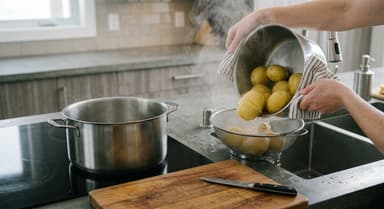
Step 2: Cook the potatoes. Boil the potatoes until completely soft. Drain the water, peel the potatoes, and let them cool slightly.
Step 3: Grate the potatoes. Finely grate the boiled potatoes into a large mixing bowl and allow them to cool completely.
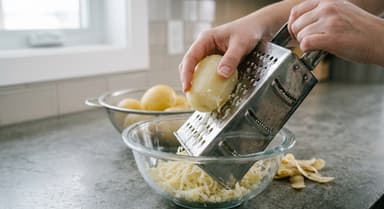
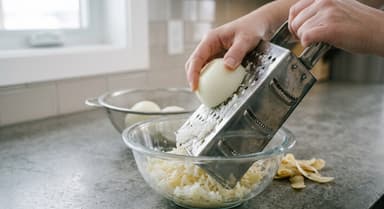
Step 4: Prepare the onion. Finely grate the onion and add it to the potatoes. If the onion releases a lot of liquid, squeeze out the excess water before adding it.
Step 5: Make the kotlet mixture. Add the ground beef, egg, saffron, turmeric, black pepper, salt, and garlic powder, if using, to the bowl.

Step 6: Mix the ingredients. Knead everything together by hand for several minutes until the mixture is smooth and evenly combined. If it feels too soft or sticky, gradually add a small amount of breadcrumbs.
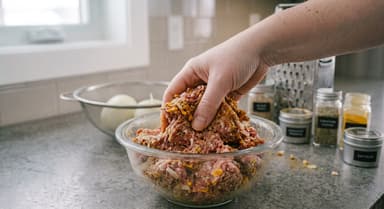
Step 7: Shape the kotlets. Lightly wet or oil your hands. Take portions of the mixture and shape them into thin oval patties.
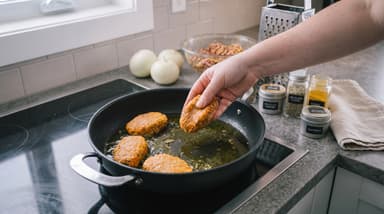
Step 8: Fry the kotlets. Heat a thin layer of vegetable oil in a frying pan over medium heat. Once the oil is hot, add the kotlets and fry for about 4–5 minutes on each side, until golden brown and cooked through.
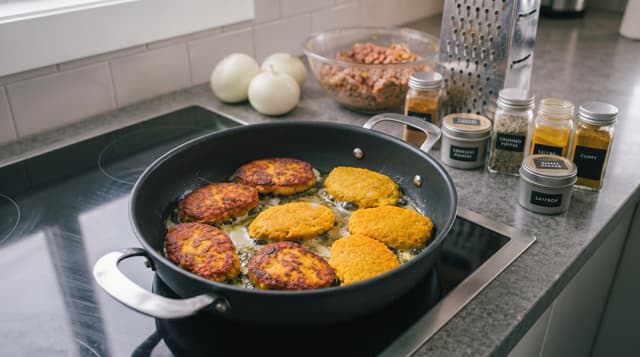
Step 9: Remove excess oil. Transfer the fried kotlets to a plate lined with paper towels and let the excess oil drain.
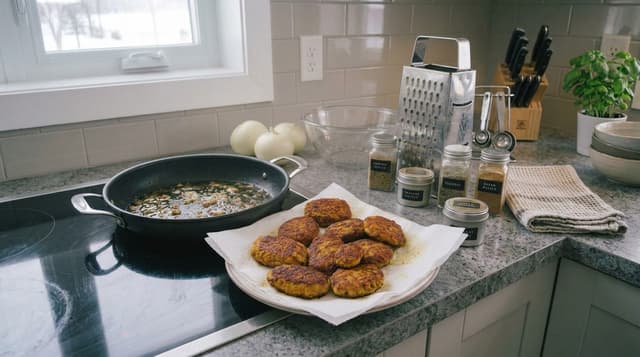
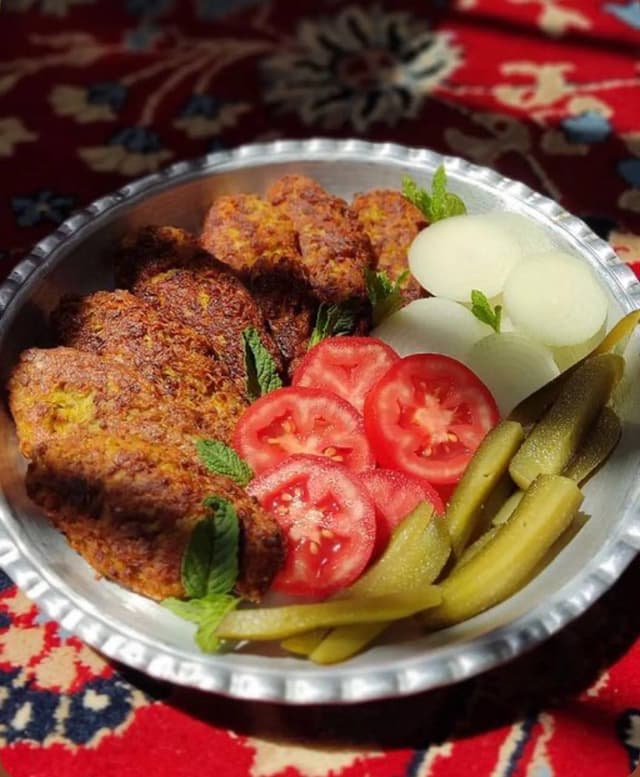
Step 10: Serve. Serve the kotlets warm or at room temperature with bread, tomatoes, pickles, and fresh herbs.
💡 Chef's Tips
Grind the saffron with a little powdered sugar to make it finer and help release more colour and aroma.
Let the potatoes cool completely before mixing them with the meat. This prevents the meat from cooking before you fry it.
If the grated onion is very watery, squeeze out the excess liquid to help the kotlets hold their shape.
Add breadcrumbs only if the mixture is too soft.
Keep the patties relatively thin so they cook evenly.
Make sure the oil is properly heated before frying. Otherwise, your patties are going to stick to the pan.
References
- 12003
The Westernization of Iranian Culinary Culture
by Chehabi, H. E.
https://doi.org/10.1080/021086032000062875Iranian Studies.
- 2
Côtelette: Étymologie de côtelette
by CNRTL
Retrieved from Centre National de Ressources Textuelles et Lexicales.
- 32005
Ketāb-e Mostatāb-e Āshpazi: Az Sir tā Piāz
by Daryabandari, N., & Rastkar, F.
- 41983
A taste of Russia
by Goldstein, D.
- 52010
Russian Food Words at Home and Abroad
by Grigorieva, A.
In R. Hosking, Food and Language: Proceedings of the Oxford Symposium on Food and Cookery 2009.
- 62015
Qajar Dynasty xiv. Qajar Cuisine
by Mahdavi, S.
Retrieved from Encyclopaedia Iranica.
- 71972
Tabbakhi ye Neshat
by Neshat al Dowleh
Tehran: Mozaffari.
- 82024
Wikipaz. Episode 23, Kotlet
(W. Podcast, Interviewer) Ramiar Manouchehrzadeh.
Music
Comments
No comments yet. If you know this dish — how your family makes it, what it is served with, when it appears — please add what you know.