


Khoresht-e Gheymeh
Overview
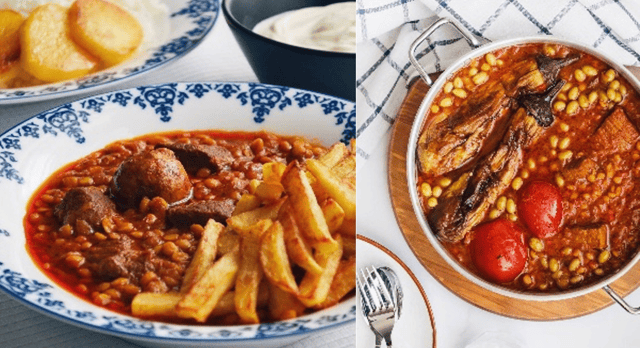
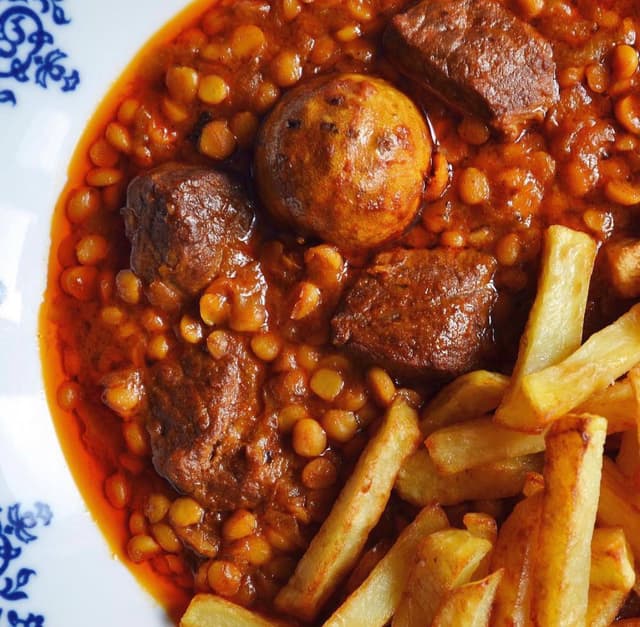
Split pea and tomato stew with lamb, topped with crispy fried potatoes.Gheimeh is a well-known Iranian stew categorized as khoresh. It is commonly prepared with small pieces of meat, yellow split peas, onion, dried lime, and spices, and is served with Chelow. In its common contemporary form, it is usually made with tomato or tomato paste and topped with thin fried potatoes. Gheimeh should not, however, be understood as a dish that has stayed the same throughout history. Like many traditional Iranian foods, its present form results from a long process of culinary change, traceable through language, literary texts, historical cookbooks, and shifting cooking practices.
History & Cultural Significance
The name of the dish points to its main historical feature. The Dehkhoda Dictionary defines gheimeh as meat cut into small pieces or minced, as well as a stew made from such meat (Dehkhoda, 2006). The word is usually linked to the Turkic qıyma or kıyma, meaning chopped or minced meat. This linguistic link matters because gheimeh did not always refer to one fixed recipe. It described a method of preparing meat, cutting it into small pieces, rather than a single set dish.
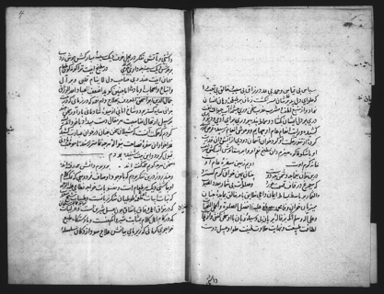
Some of the earliest evidence for a dish resembling later gheimeh comes from Persian culinary poetry of the fourteenth century. During the late Ilkhanid and post Ilkhanid period, the Shirazi poet known as Bushaq At'ima built much of his literary work around food and kitchen life (Mugler, 2022). He referred to gheimeh together with nokhod e moqashshar, literally peeled chickpeas, a processed pulse comparable to the split peas used in later gheimeh recipes. This poetry is valuable because it shows that the pairing of finely cut meat with peeled pulses was already a recognizable culinary idea by the second half of the eighth century AH.
The traveler Jean Chardin, a French visitor to Safavid Iran, described the meat served to officials and notable guests at the shah's table as always heavily spiced, whether prepared as gheimeh stew, other kinds of khoresh, or kabab (Chardin, 1811). This kind of outside observation supports the idea that gheimeh, or dishes very close to it, already had a recognized place at formal Safavid tables.
By the Qajar period, gheimeh appears in a form much closer to the dish known today. One especially useful account comes from the culinary writing of Nader Mirza Qajar, who grouped a number of rich meat dishes under the term mosamman, meaning dishes marked by a generous use of fat, and placed gheimeh in this category. His description begins with fatty meat cut into small, fairly even pieces, cooked with oil, onion, and split pulses, with saffron and other seasoning added afterward. He also noted that dried lime could be added, and that adding eggplant produced another variation, gheimeh bademjan. This account already contains much of the structure of the gheimeh eaten today.
Nader Mirza gave the dish an unusually high status, calling it the "shahanshah e khoresh ha," king of stews, and claiming that it survived from the Sasanian period (Nader Mirza Qajar, 19th century). This claim is useful as evidence of how gheimeh was regarded in the Qajar period, but it should not be read as proof of an actual Sasanian origin, since no earlier document has been found to confirm it. It is more useful to read the statement as a sign that nineteenth-century Iranians themselves saw gheimeh as an old and prestigious part of their culinary heritage.
One major change in gheimeh recipes came with the introduction of the tomato into nineteenth-century Iran. Tomatoes were at first treated as a foreign ingredient and became known as gowjeh ye farangi, one of several new ingredients, alongside potato, green beans, and peas, that were marked by the label farangi, meaning of European origin (Mahdavi, 2015). Historical accounts of Qajar cuisine show that these new ingredients entered Iranian food practice during this period and gradually reshaped older dishes as well as producing new ones. The tomato or tomato paste that now gives most versions of gheimeh their red color is therefore a recent addition to an older culinary structure. Fried potato garnish was also added more recently by the introduction of potatoes to Iran. The modern dish therefore represents elements from several historical periods rather than representing one unchanged ancient recipe.
Regional variation shows how flexible gheimeh is. Although finely cut meat remains a shared feature, different regions have cooked their own versions. Gheimeh nesar from Qazvin provide a clear example. To prepare this food, finely chopped meat is combined with rice and decorated with slivered almonds, pistachios, barberries, and citrus peel. Other regional versions use eggplant, chickpeas, different pulses, or locally preferred souring agents such as unripe grape juice called Ab ghoreh.
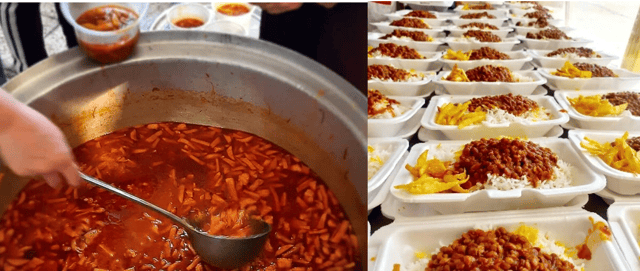
Cultural importance of gheimeh reaches beyond its history. Gheimeh has become one of the dishes tied to Iranian votive food practice, prepared and shared as an act of devotion, gratitude, or communal support during collective mourning or celebration. Different regions have developed their own forms of votive gheimeh, which shows how a widely shared ritual practice can still hold onto regional culinary differences. Preparing votive gheimeh is often a collective effort, involving the buying and preparing of ingredients, cooking in large pots, and serving and distributing the finished food among a wider group. In this way the dish becomes part of a broader social process, where cooking builds cooperation and brings people together around a shared occasion. For many Iranians, its smell and taste can bring back memories of neighborhood gatherings and communal ceremonies.
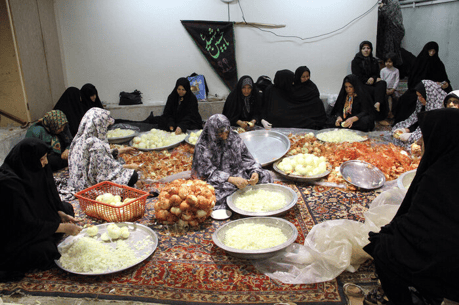
Gheimeh's role in ritual and mourning food is not limited to a single community. Among Zoroastrians in Kerman, gheimeh is served to guests during memorial gatherings held a few days after a death, a practice specific to that community. These regional and communal differences show that gheimeh's place in mourning and memorial practice varies considerably even within a single religious tradition, and that no single ritual use can stand for the dish as a whole.
Ingredients
Lamb
Split Yellow Peas
Onion
Dried Lime (Limoo Amani)
Turmeric
Salt
Potato
Tomato paste
Vegetable Oil
Cinemon stick
Hot Water
Recipe
Preparation Method
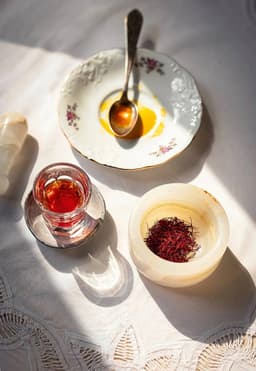
Step 1: Prepare the saffron. Finely grind the saffron and pour the hot water over it. Leave it to brew while you prepare the stew.
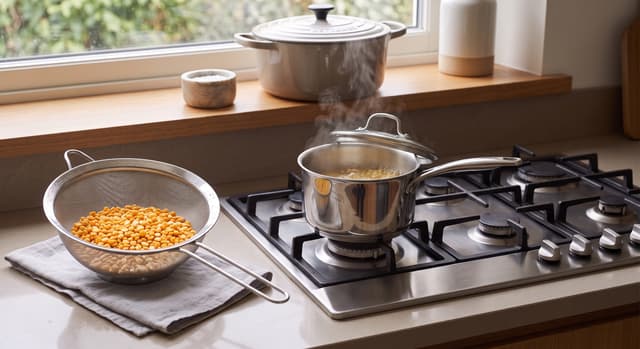
Step 2: Prepare the split peas. Rinse the yellow split peas well. Boil them separately for about 10–15 minutes, then drain and set aside.
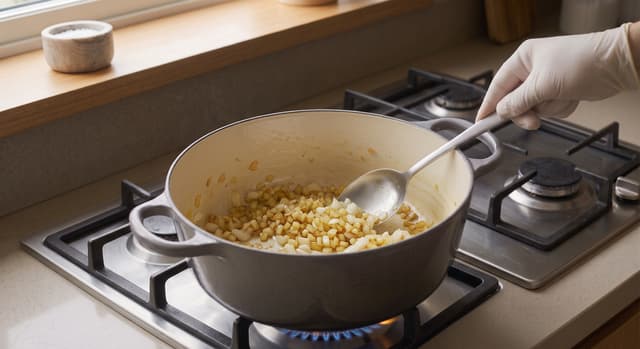
Step 3: Fry the onion. Heat the oil in a pot over medium heat. Add the chopped onion and cook until soft and golden.
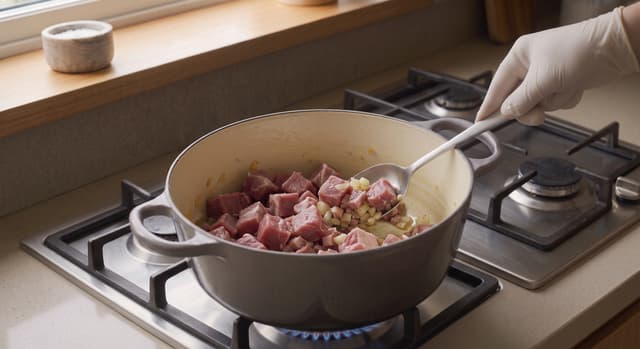
Step 4: Add the meat. Add the beef or lamb to the onion and cook for several minutes until the meat changes colour and is lightly browned.
Step 5: Add the spices. Add turmeric and black pepper and stir well so the meat is evenly coated with the spices.
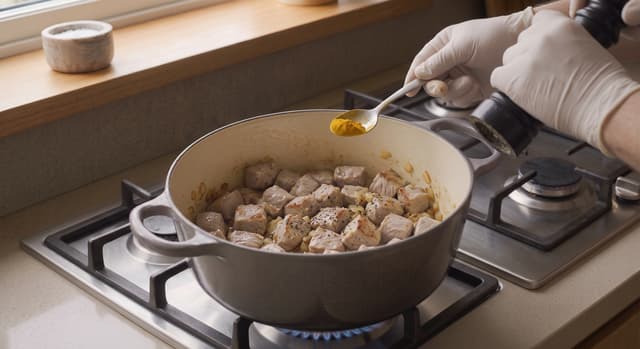
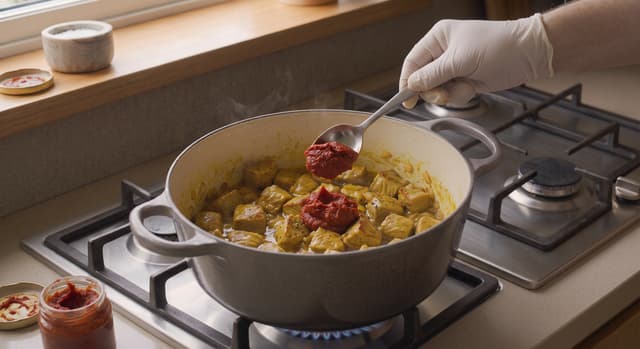
Step 6: Cook the tomato paste. Add the tomato paste and fry it with the meat for 2–3 minutes until it becomes darker in colour and releases its aroma.
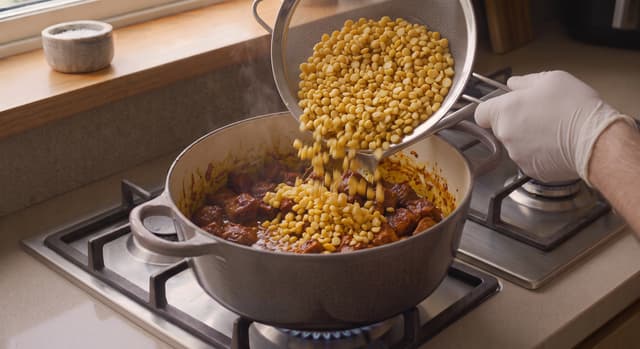
Step 7: Add the split peas. Add the partially cooked split peas to the pot and stir gently to combine.
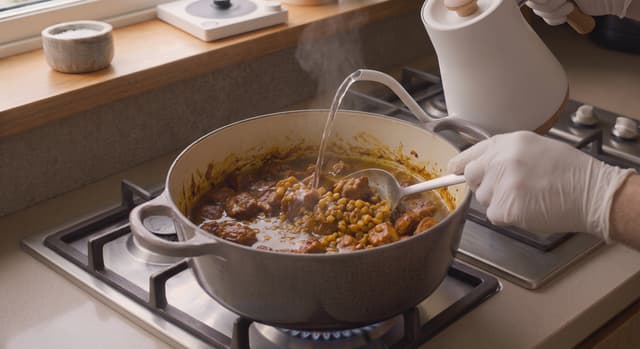
Step 8: Add the water. Pour in enough hot water to cover the meat. Bring the stew to a gentle boil, then reduce the heat, cover the pot, and simmer for about 60 minutes.
Step 9: Prepare the dried limes. Pierce the dried limes several times with a fork or knife. Add them to the stew and continue cooking for another 30–40 minutes.
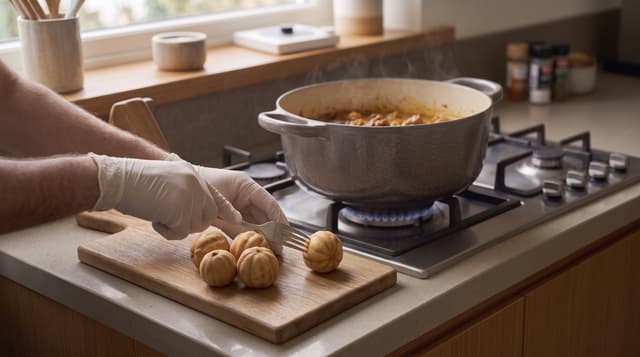
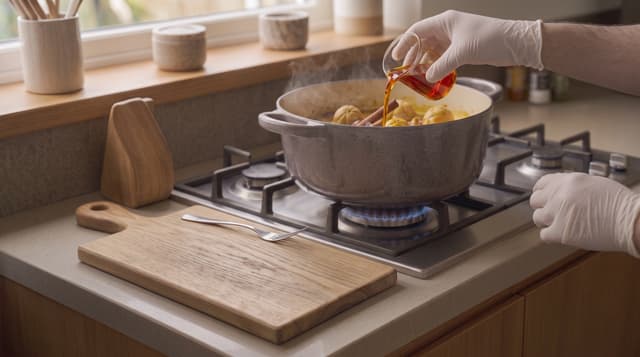
Step 10: Season the stew. Add salt, cinnamon, and the brewed saffron. Continue simmering until the meat is tender, the split peas are fully cooked, and the sauce has thickened.
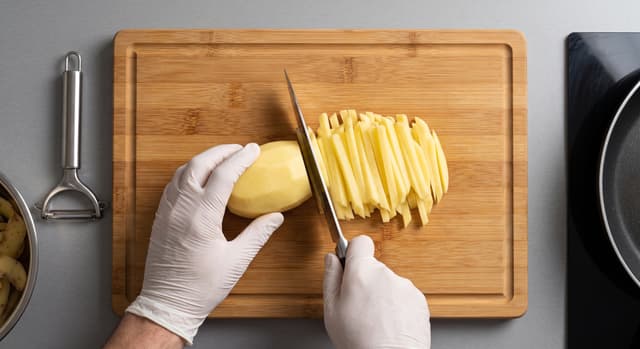
Step 11: Prepare the potatoes. Peel the potatoes and cut them into thin matchsticks. Rinse them with cold water and dry them well.
Step 12: Fry the potatoes. Heat vegetable oil in a frying pan and fry the potato strips until golden and crispy. Transfer them to a plate lined with paper towels.

Step 13: Finish the stew. Taste the stew and adjust the salt or seasoning if needed. The finished Gheymeh should have a rich, thick sauce rather than a watery consistency.
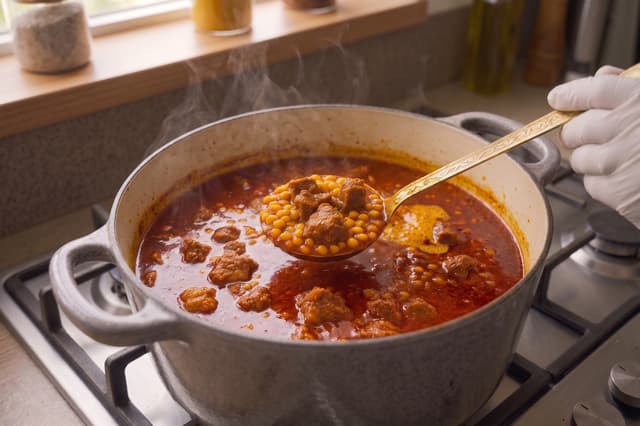
Step 14: Serve. Serve Khoresh-e Gheymeh with Persian rice and place the crispy fried potatoes on top just before serving.
💡 Chef's Tips
Parboiling the split peas separately helps them keep their shape and prevents the stew from becoming too thick or cloudy.
Fry the tomato paste well before adding water. This deepens the colour and gives the stew a richer flavour.
Pierce the dried limes before adding them so their flavour can slowly infuse into the stew.
Do not add the dried limes too early, as cooking them for too long can make the stew bitter.
Add the saffron toward the end of cooking to preserve its aroma.
Add the fried potatoes only when serving so they remain crispy.
References
- 11811
The Travels of Sir John Chardin, by the Way of the Black Sea
by Chardin, J.
In J. Pinkerton, A General Collection of the Best and Most Interesting Voyages and Travels in All Parts of the World.
- 22006
Loghatnāmeh-ye Dehkhodā [Dehkhoda Dictionary]
by Dehkhoda, A.-A.
Tehran: University of Tehran.
- 32015
Qajar Dynasty xiv. Qajar Cuisine
by Mahdavi, S.
Retrieved from Encyclopaedia Iranica.
- 42022
A Man for All Seasonings
by Mugler, J.
Retrieved from Hill Museum & Manuscript Library (HMML).
Music
Comments
No comments yet. If you know this dish — how your family makes it, what it is served with, when it appears — please add what you know.