


Ash Reshteh
Overview
Āsh should not be understood as the name of one specific dish with a fixed recipe. Rather, the term refers to a broad family of thick, one-pot, slow-cooked foods in Iranian cuisine similar to porridge and soup. Different types of ash may contain various combinations of grains, legumes, herbs and vegetables, noodles, dairy products, fruits, sour flavorings, and, in some cases, meat. Among wide varieties of ash, ash reshteh (noodles) is one of the best-known examples. It is usually made with legumes, local herbs, and noodles prepared from wheat flour, and seasoned with Kashk.

History & Cultural Significance
The Mongol invasion of Iran in the thirteenth century, followed by the establishment of the Mongol Empire and later the Timurid Empire, brought significant changes to Iran that were not limited to changing the political borders. Increased connections between Iran and Central Asia also contributed to greater commercial and cultural exchange. Increased connections between Iran and Central Asia also contributed to greater commercial and cultural exchange. Some Central Asian and East Asian cooking methods and ingredients entered the Iranian plateau and combined with local traditions. One change associated with this period is the popularity of noodles and dumplings in Iranian cuisine (Fragner, 1987). Although no precise historical evidence shows that the preparation of āsh reshteh began during this period, sources that associate the introduction of noodles to Iran with this era make this a plausible hypothesis.
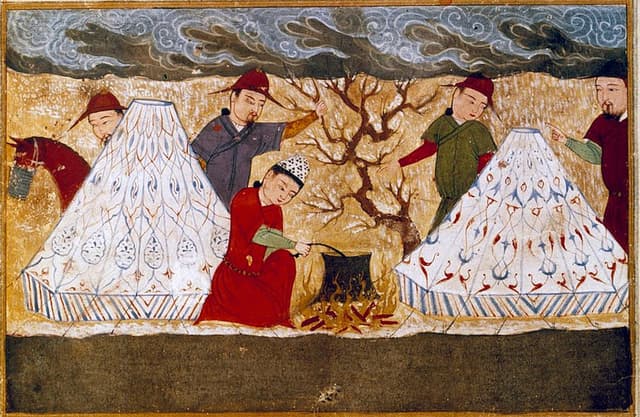
The works of Besshaq At‘ema Shirazi, a fifteenth-century poet, are important sources for understanding the food culture of this period. His poems are not cookbooks in the strict sense, but their extensive use of food names, ingredients, and terms related to eating and cooking provides valuable information about the culinary culture of his time. These works show that foods based on flour, dough, and grains, as well as different types of ash and noodle dishes, were known in Iranian food culture during that period (Ghanoonparvar, 1993), (Matthee, 2016). However, modern ash-e reshteh, including its Ingredients and cooking methods, has changed over time.
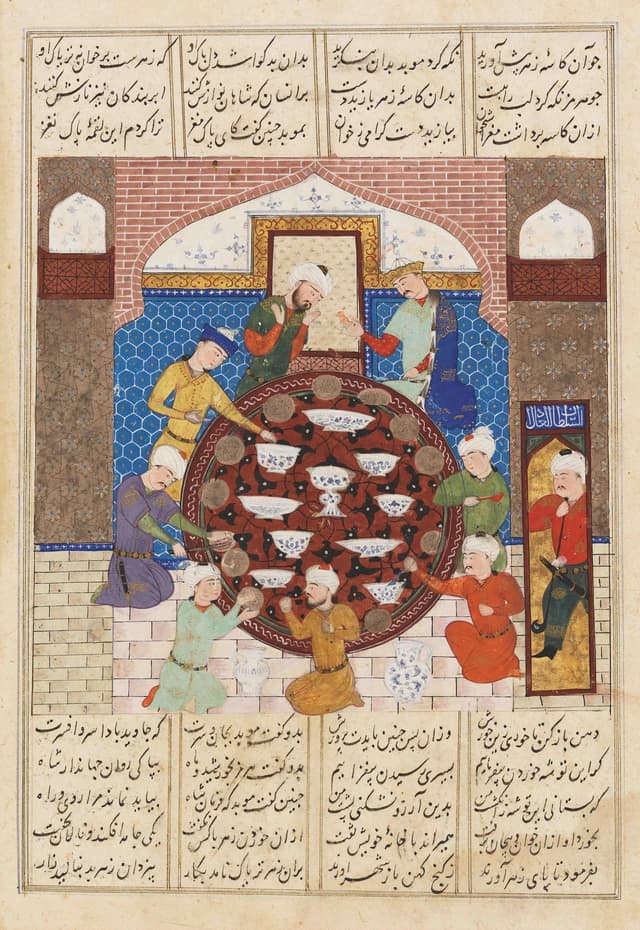
Qajar-period written sources provide a much broader picture of the variety of ash. Kārnāmeh-ye khorāk, written by Nader Mirza Qajar, records many types of ash prepared with combinations of herbs, grains, and legumes, together with ingredients such as sour grape juice, pomegranate, sumac, mung beans, kashk, noodles, milk, and eggplant (Nader Mirza Qajar, 19th century). This variety shows that by the nineteenth century, ash reshteh had already developed.

Ash also appears in many Persian proverbs and expressions, and sources on popular culture have recorded this widespread use (Eilers, Elahi, & Boyce, 1987). For example, “It is the same ash and the same bowl” is used when circumstances remain unchanged despite expectations of improvement. “Hotter than the ash” describes someone who shows more sensitivity about an issue than the person directly involved. “Having a burned mouth without having eaten the ash” refers to a situation in which someone suffers responsibility or negative consequences without receiving any benefit. The proverb “When there are two cooks, the ash becomes either too salty or tasteless” expresses the problems caused by having too many decision-makers. The presence of one food in such varied linguistic contexts shows that ash has become a familiar part of everyday experience and Persian-speaking popular culture.

Āsh reshteh is one of the clearest examples of how food in Iran has rarely been just about nourishment. Among Iran's Zoroastrian communities, for instance, certain types of āsh have long been tied to specific festivals rather than everyday eating. Ethnographic work on villages around Yazd describes how āsh was cooked for sacred days such as Mehregan, with each family customarily bringing a portion of the raw ingredients, wheat, lentils, chickpeas, whatever they could contribute, all of which was then cooked together in large pots at the fire temple and shared out among the whole community (Eilers, Elahi, & Boyce, 1987). Preparing āsh this way was a symbolic act. It’s a way of enacting solidarity and cooperation among people, and the dish was part of how the festival was marked and experienced together.
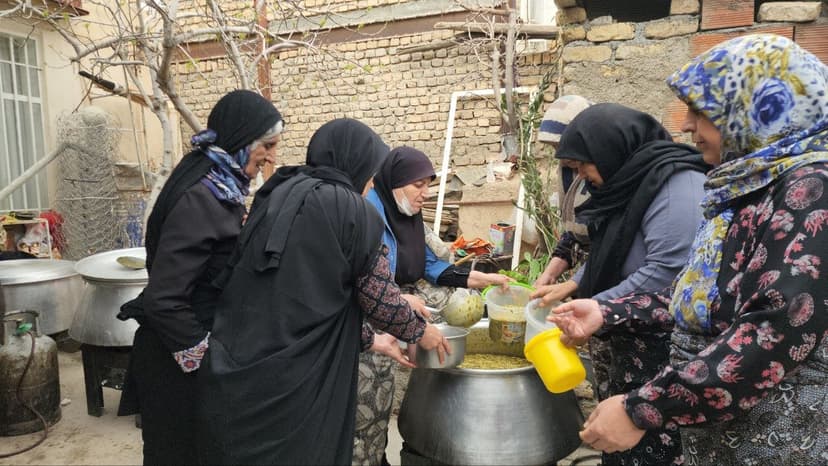
A similar logic runs through āsh-e posht-e pā, which literally means “behind-the-foot ash,”. The dish is prepared a few days after a family member leaves on a journey so that the trip will be safe, a custom documented as part of the broader repertoire of āsh associated with life events (Eilers et al., 1987). In it, the food becomes a way to channel a family's private worry into something the neighbors share as well. Other varieties of āsh still served a more explicitly ritual purpose, cooked to ward off misfortune, to pray for someone to recover from illness, or to hope a wish fulfilled (Eilers et al., 1987).
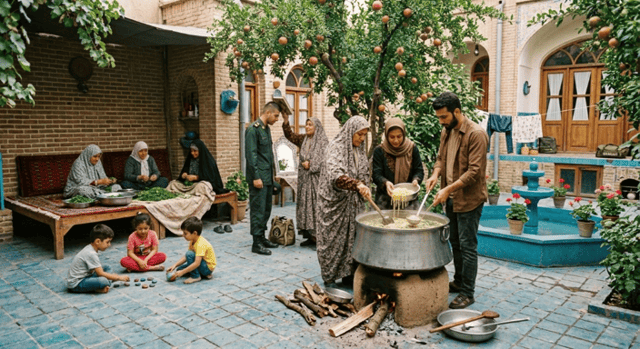
āsh-e Nazri is another way of serving ash reshteh. In this context, the dish offered as a religious vow holds a particularly central place within this tradition, and part of the reason may lie simply in how it is made. Because ash is a kind of food that can be prepared on a large scale in one pot, it does not require many cooking facilities. Second is the collaboration in preparing the dish mentioned earlier that gives the activity social weight (Vejdani, 2026).
Even how āsh looked on the surface matters. The design made with fried onion, mint, kashk, or saffron on the surface is not just decoration. In votive contexts, they could spell out the name of a shrine or a short prayer, turning the plate itself into part of the ritual (Eilers et al., 1987).
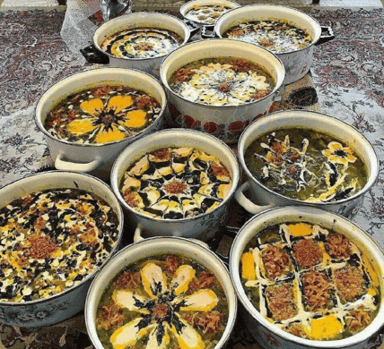
This kind of votive āsh was not limited to ordinary people. Historical evidence describes an āsh-pazān (cooking āsh) ceremony held at the court of Naser al-Din Shah, the fourth Qajar king, where princes, nobles, and ministers were invited to a summer residence near Tehran to take part in preparing āsh reshteh, all carried out with considerable ceremony. Different stories are told about how this tradition began. In one, Naser al-Din Shah's mother, Mahd-e Olya, vowed as a young mother to prepare āsh for her son's health, a vow she renewed every spring, and one the Shah is said to have carried on himself once he took the throne. In another version, the Shah made the vow himself during an outbreak of cholera, promising to cook āsh every year if he survived. Once cooked, the āsh was ladled into bowls of different sizes and handed out according to each guest's rank, and every guest was expected to return their bowl filled with gold coins as a gift to the Shah. In this ceremony, āsh was therefore more than an ordinary food. The preparation process carried a spiritual and votive meaning associated with health, while the way the food was served reflected an individual’s position in relation to the Shah, and finally, the gold gifting expressed loyalty and respect toward the king.
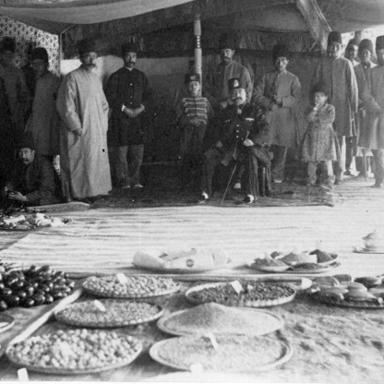
Ash reshteh was also present in urban life. A photograph from the late Qajar period in the A. P. H. Hotz collection at Leiden University Library shows a man who was probably an ash seller. Alongside written sources, this visual evidence suggests that ash was part of Iran’s urban and street-food culture as well as its domestic and courtly food traditions (Matthee, 2016).
Ingredients
Chickpeas
Dried chickpeas
Dried kidney beans
Lentils
Onion
Garlic
Parsley
Coriander
Spinach
Chives or green onions
Reshteh (Persian soup noodles)
Dried mint
Turmeric
Black pepper
Salt
vegetable oil
Hot water
Recipe
Preparation Method
Step 1: Soak the chickpeas and beans. Soak the dried chickpeas and kidney beans in plenty of water overnight. Drain and rinse them before cooking.
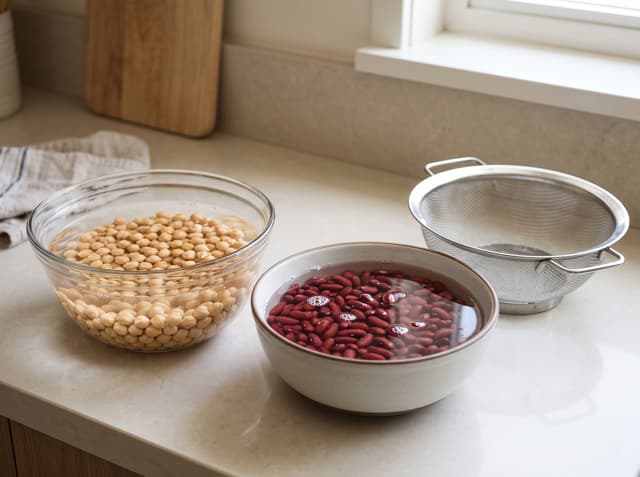
Step 2: Partially cook the chickpeas and beans. Place the soaked chickpeas and kidney beans in a pot and cover them with fresh water. Cook until they are mostly tender but still slightly firm in the centre.
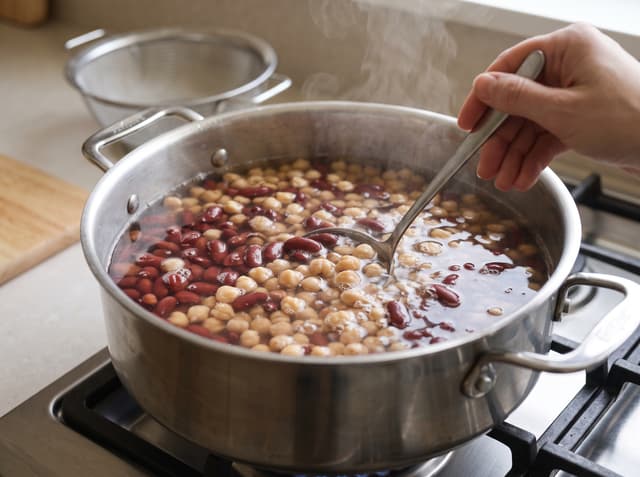
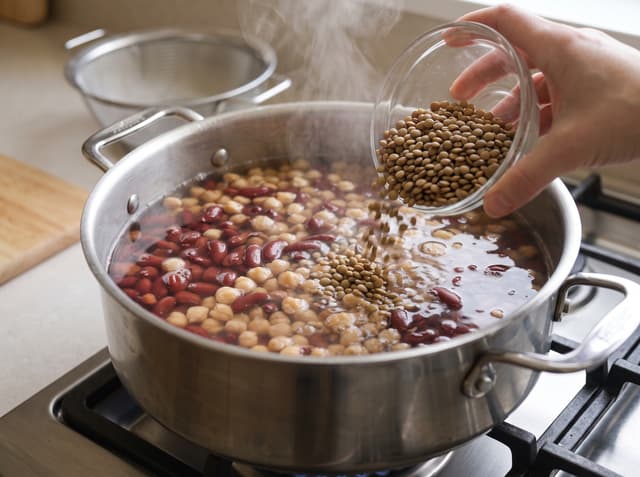
Step 3: Add the lentils. Add the lentils toward the end of the cooking time, since they cook much faster than the chickpeas and kidney beans. Cook until the lentils just begin to soften. Drain all the legumes and set them aside. They should not be fully cooked yet, as they will finish cooking later in the ash.
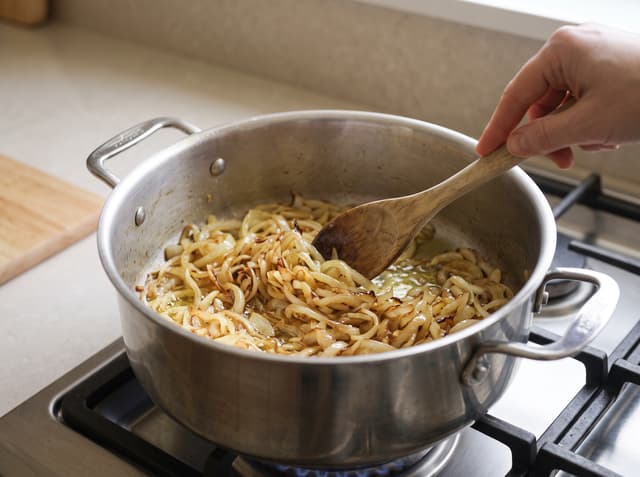
Step 4: Fry the onions. Heat the oil in a large pot over medium heat. Add the sliced onions and cook until golden and caramelized. Remove some of the fried onions and set them aside for garnish.
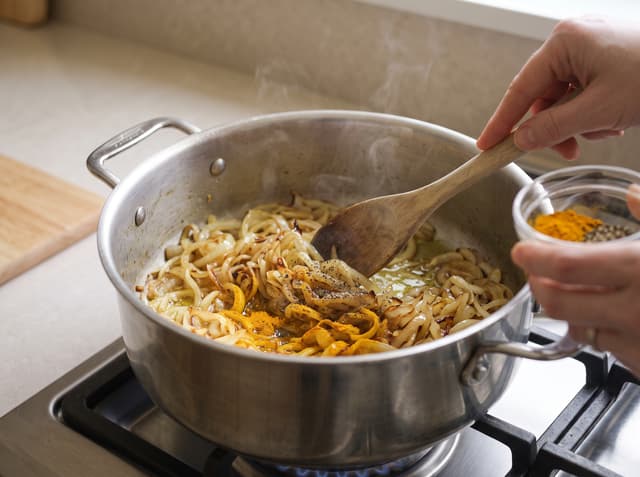
Step 5: Add the garlic and spices. Add the garlic, turmeric, and black pepper to the remaining onions. Cook briefly until fragrant, taking care not to burn the garlic.
Step 6: Add the herbs. Add the chopped herbs to the onion and garlic mixture. Stir gently to combine, but do not fry the herbs.
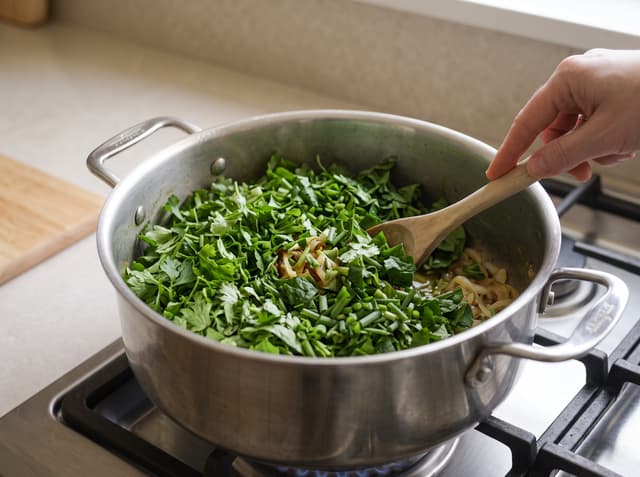
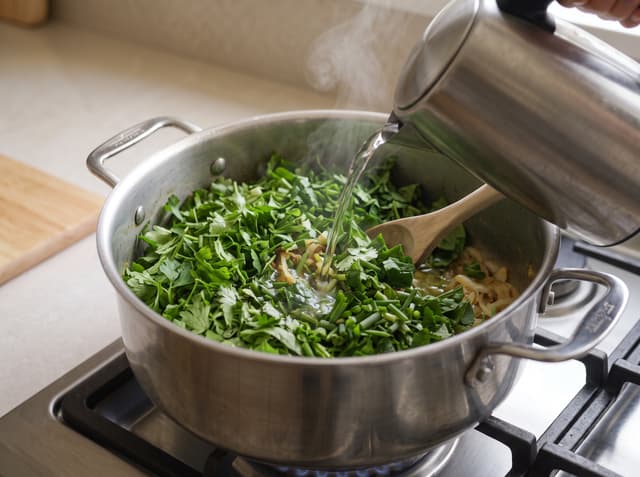
Step 7: Add the water. Pour hot water into the pot and bring the mixture to a gentle boil. Reduce the heat and let the herbs cook until they begin to soften.
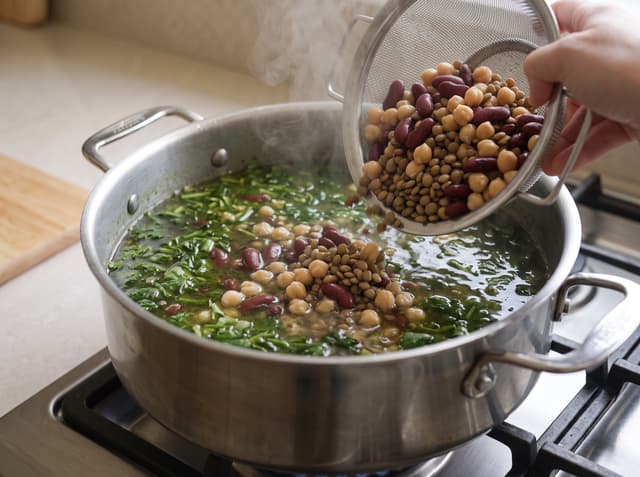
Step 8: Add the legumes. Add the drained, partially cooked chickpeas, kidney beans, and lentils to the pot. Let everything simmer together for about 30 minutes, until the legumes become tender but still hold their shape.
Step 9: Add the reshteh. Break the reshteh into shorter pieces if needed and add them gradually to the pot. Stir gently to prevent the noodles from sticking together.
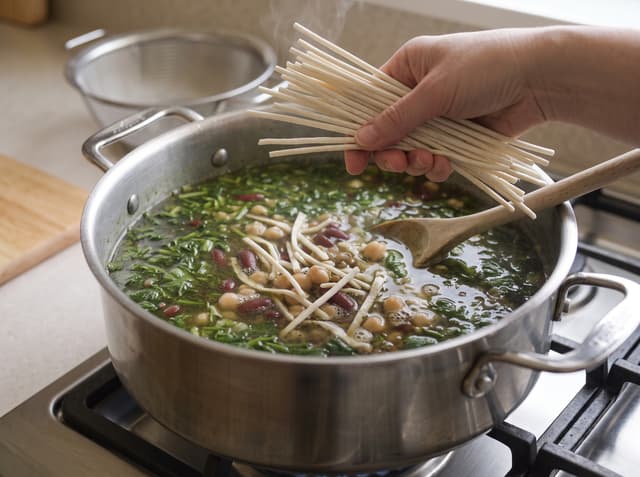
Step 10: Cook until thick. Let the ash simmer until the reshteh is fully cooked and the soup becomes thick and creamy. Stir occasionally, especially after adding the noodles.
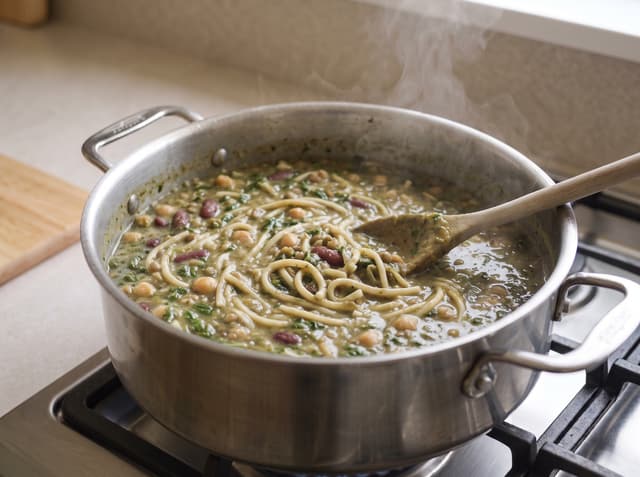
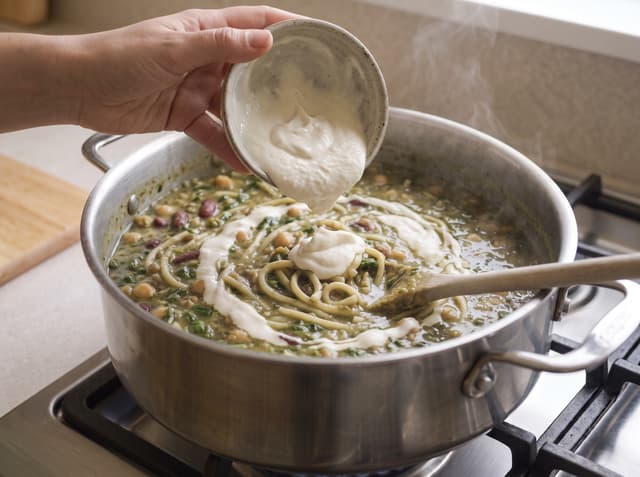
Step 11: Add the kashk. Stir a few tablespoons of kashk into the ash and let it heat through gently. Taste before adding salt, as both kashk and reshteh can already be salty.
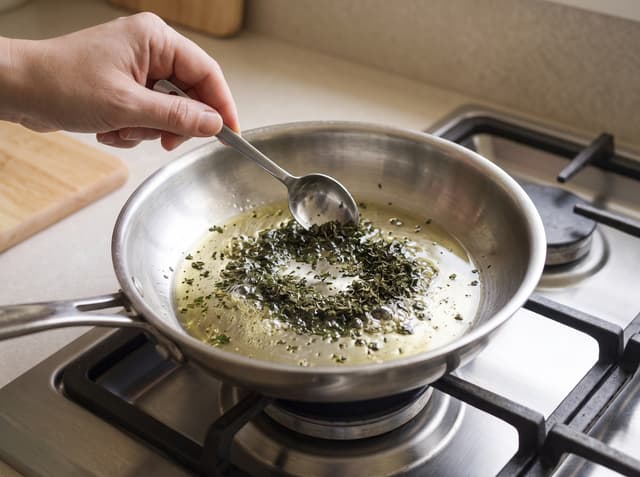
Step 12: Prepare the mint garnish. Heat a little oil in a small pan. Add the dried mint and fry it for only a few seconds, then immediately remove it from the heat to prevent it from burning.
Step 13: Serve. Ladle the Ash-e Reshteh into bowls and garnish with kashk, fried onions, fried garlic, and fried mint.

💡 Chef's Tips
Soak chickpeas and kidney beans overnight to reduce their cooking time and help them cook more evenly.
Cook the chickpeas and kidney beans first, then add the lentils later because lentils soften much faster.
Do not fully cook the legumes before adding them to the ash. They should finish cooking with the herbs so they absorb more flavour without becoming mushy.
Do not fry the fresh herbs. Add them directly to the onion and garlic mixture before adding the water.
Add the reshteh gradually and stir gently to prevent the noodles from sticking together.
Ash-e Reshteh thickens considerably as it cooks and also after resting, so add a little hot water if it becomes too thick.
Taste the ash before adding salt because kashk and reshteh may already contain a significant amount of salt.
Fry the dried mint only for a few seconds. It burns quickly and can become bitter.
References
- 11987
ĀŠ
by Eilers, Elahi, & Boyce
Retrieved from Encyclopaedia Iranica.
- 21987
ĀŠPAZĪ
by Fragner, B. G.
Retrieved from Encyclopaedia Iranica.
- 31993
Cookbooks, Classical, in Persian
by Ghanoonparvar, M. R.
Retrieved from Encyclopaedia Iranica.
- 42016
Patterns of Food Consumption in Early Modern Iran
by Matthee, R.
https://doi.org/10.1093/oxfordhb/9780199935369.013.13In Oxford Handbook Topics in History. Oxford University Press.
- 52026
Nineteenth-Century Iranian Culinary Culture: Daily Rhythms, Hospitality, and Votive Offerings
by Vejdani, F.
https://doi.org/10.1080/20549547.2025.2583015Global Food History.
Music
Comments
No comments yet. If you know this dish — how your family makes it, what it is served with, when it appears — please add what you know.